10 Academic Search Engines and Databases for Research
Ready to take your research to the next level? Discover the best academic search engines designed to supercharge your research discovery. Explore now
Gone are the days when researchers used to spend hours in the library skimming through endless reference books and resources. Now, thanks to academic search engines — with just a few clicks, researchers can access an extensive amount of information at their fingertips.
However, not all search engines are designed to make the research discovery process easier. It varies from one search engine to another, few might not have updated their database to the latest articles, while others might still provide older articles as a result of your search keyword or topic, and so on. This way, half of the researcher’s time is consumed shortlisting the best academic search engines.
Therefore, to help you choose the best search engine for academic research, we’ve crafted this blog. In this article, we will explore the academic search engines and why they are essential for scholars, researchers, and students alike.
Introduction to Academic Search Engines
Academic search engines are online repositories or databases that host millions of research articles and allow users to find relevant scholarly articles, research publications, conference proceedings, and other academic resources. Unlike web search engines like Google or Bing, these platforms are specifically designed to provide accurate, reliable, and relevant academic content.
These search engines often have advanced features that help users filter their search results based on specific criteria. For example, SciSpace helps you filter the results based on author, publication date, PDF, open-access, and more. In addition, it also provides citation information, abstracts, and full-text access to research papers and other scholarly literature, making them invaluable tools for scholars and researchers.
Academic search engines play a crucial role in the research process by providing scholars with easy access to relevant and reliable information. They save researchers valuable time by eliminating the need to sift through irrelevant search results and provide them with free access to a focused pool of academic resources.
With their advanced features and comprehensive coverage, these academic databases empower researchers to stay at the forefront of their fields and contribute to the advancement of knowledge.
Benefits of using reliable academic search engines for research
When it comes to academic research, using reliable search engines is of utmost importance. The credibility and quality of the sources you rely on can significantly impact the results of your research findings and conclusions.
Here are the potential advantages of using a popular search engine!
1. Reliable scholarly source: By using an academic search engine, researchers can ensure that the information they find is from reputable sources. These academic databases typically index content from scholarly journals, universities, research institutions, and other reliable and cited sources. As a result, the risk of using incorrect or biased information, which is prevalent on the open web, is significantly reduced.
2. Increased exposure to enormous articles: With a reliable academic search engine, you can access a vast array of scholarly articles and research publications. These search engines have extensive academic databases that include articles from various disciplines, including science and social sciences, allowing researchers to explore a wide range of topics and find relevant studies to support their research.
3. Advanced search filters: Reliable academic search engines often provide advanced search features that enable researchers to refine their search queries and narrow down the results to find the most relevant and latest information. These features may include filters for publication date, author, journal, and citation count, among others. By utilizing these advanced search terms and options, researchers can save time and effort by quickly finding the most pertinent resources.
4. Access full-textjournal articles: Another advantage of using search engine for academic research is the ability to access full-text scientific articles. Many academic search engines provide direct links to the full text of articles, either freely available or through institutional subscriptions. This ensures that researchers can read and analyze the complete article, rather than relying on abstracts or TL;DR summaries.
5. Additional tools support: The most reliable search engines for research like SciSpace offer additional tools and features to enhance the research workflow. These may include citation generators, reference management systems, and options to save and organize search results. These tools can greatly facilitate the organization and the citation analysis of sources, making the research process more efficient and systematic.
Best search engines for research
These ten discovery services differ in disciplinary coverage, indexing and full-text access; the order is not a quality ranking. Crossref specializes in metadata, while other services may link to publisher pages rather than host PDFs.
Now that we’ve understood the importance of using reliable search engines for academic research, let's explore some of the best academic literature search engines available:
1. SciSpace
SciSpace
SciSpace lets researchers search scholarly papers, inspect related results and open available full-text sources. Coverage, access and relevance vary by topic, so check the record and publisher page before citing a paper.
One of the standout features of SciSpace is its “Trace feature” which allows users to find relevant research papers based on the preferred criteria including citation counts, related publications, references, authors, and more. It helps you land on the right research paper based on your preferences or research needs.
SciSpace is the only search engine that not only helps you discover relevant scholarly scientific literature but also allows you to read a research paper using its AI research assistant, conduct a literature review, and generate accurate citations for your research publications. It is an all-in-one platform that accelerates your research workflow with its AI-powered tools. You can explore all of them here.
Google Scholar is undoubtedly one of the popular search engines. With its vast database of scholarly literature, Google Scholar allows users to search for articles, theses, books, and conference papers across multiple academic disciplines. Google Scholar helps users save their search queries and set up email alerts for new publications in their field of interest. This ensures that researchers stay up-to-date with the latest developments in their respective fields.
3. PubMed
PubMed
PubMed is a go-to academic search engine for those in the field of medicine and life sciences. Developed by the National Center for Biotechnology Information (NCBI), PubMed provides access to a vast collection of medicine, biomedical, health sciences, or literature, including journals, clinical trials, and scientific articles. Its meticulously curated articles makes it a trusted resource for medical professionals, scientists, researchers, and students alike.
4. Scopus
Scopus
Scopus is a comprehensive database of science that covers a wide range of scholarly literature across multiple disciplines. It offers a vast collection of peer reviewed articles, including publications, conference papers, and patents. With its extensive coverage and powerful search capabilities, Scopus is a valuable tool for researchers looking to explore the latest developments in their respective fields.
5. JSTOR
JSTOR
JSTOR is a repository that provides access to a vast collection of academic journals, books, and primary sources. Its interdisciplinary approach makes it a valuable resource for researchers across various fields of study.
6. IEEE Xplore
IEEE Xplore
IEEE Xplore is a premier academic search engine for those in the fields of engineering, computer science, and technology. It provides access to a vast collection of technical articles, conference papers, and standards published by the Institute of Electrical and Electronics Engineers (IEEE).
IEEE Xplore is a treasure trove of knowledge for researchers and engineers looking to stay at the forefront of technological advancements.
7. Semantic Scholar
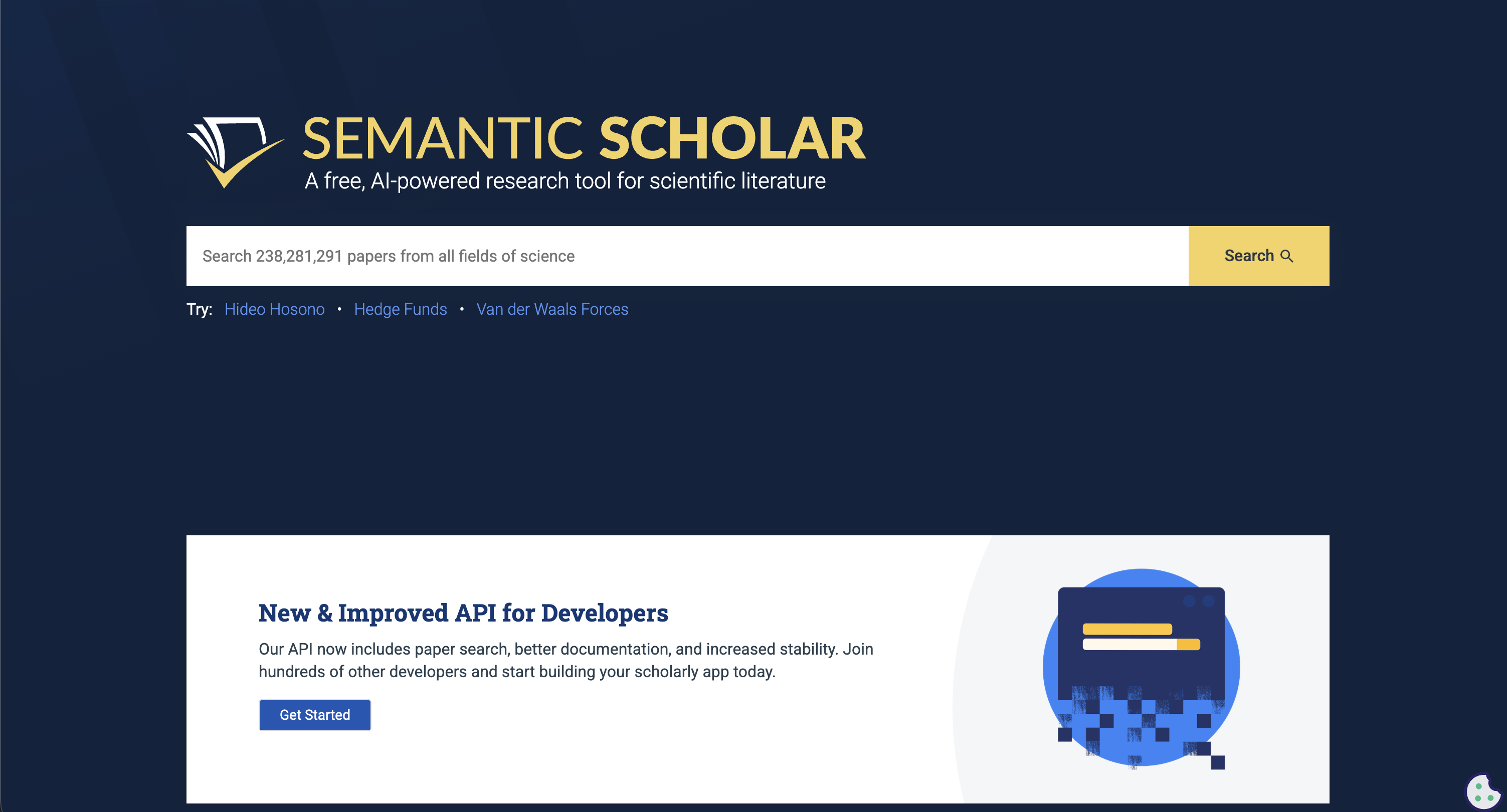
Semantic Scholar is a free academic search tool for exploring papers across disciplines. It provides paper records, citation information, and ways to follow related research. Its AI features can help users scan a topic, but any summary or suggested connection should be checked against the paper itself.
Use it when you have found one useful paper and want to see related publications, authors, or research directions. As with other discovery tools, the availability of a full-text copy varies by work.
8. ERIC
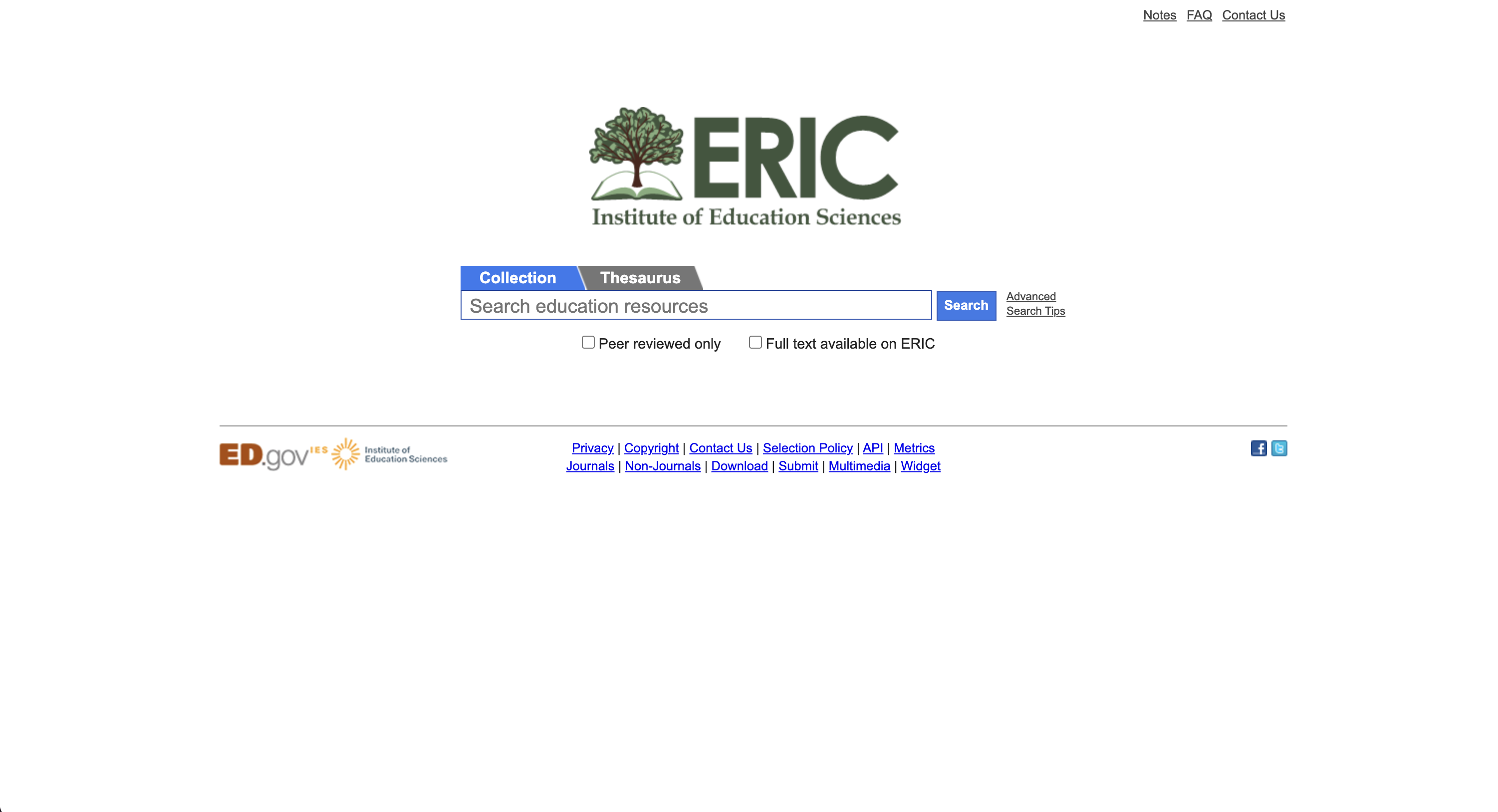
ERIC is a specialist search service for education research. It covers education-related publications and lets users narrow results with options such as peer reviewed only and full text available on ERIC.
Those filters make ERIC useful for questions about teaching, learning, education policy, and educational practice. Check the document type and study design as you review results: an education report and a peer-reviewed study may answer different questions.
9. DOAJ
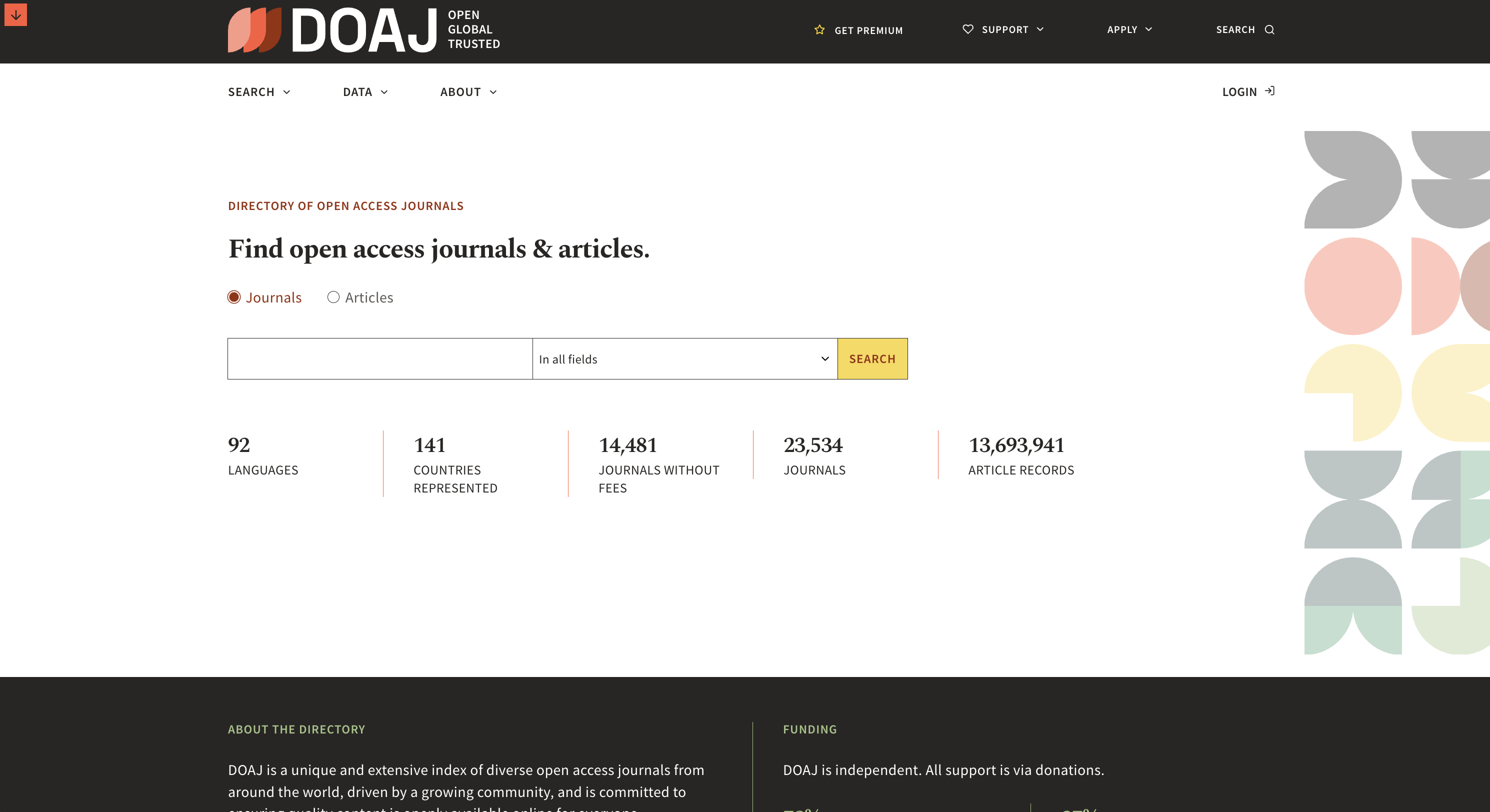
DOAJ helps readers discover peer-reviewed open-access journals and articles across disciplines. Its focus on openly available scholarly publishing makes it useful when access is a priority.
You can search for a journal or article, then inspect its record for details relevant to your research or publishing decision. DOAJ is a focused open-access directory; it will not cover every scholarly publication on a topic.
10. Crossref Metadata Search
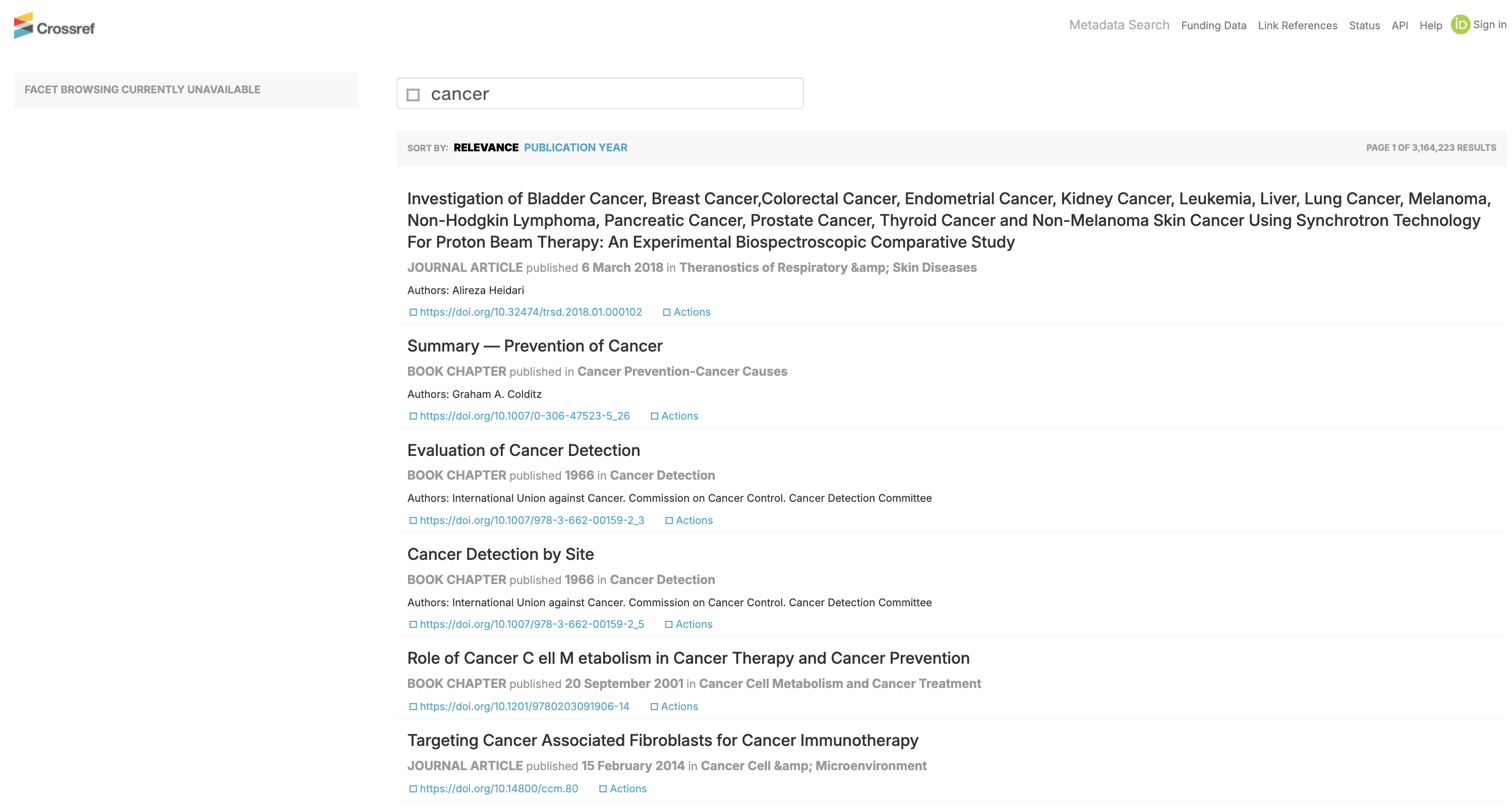
Crossref Metadata Search helps users find publication records using details such as a title, author, citation, or DOI. It is particularly useful when you need to identify the correct DOI or confirm bibliographic details for a reference.
Crossref collects metadata, not the articles themselves. A record may include a link associated with the full text, but whether you can read that text depends on the destination and its access conditions.
Criteria for choosing the best academic search engine
With so many free academic search engines to choose from, it can be challenging to determine which one is the best fit for your research needs. Here are some criteria to consider when selecting an academic search engine:
Relevance: The search engine should provide highly relevant search results that are specific to your area of study.
Database size: A larger database gives you access to a broader range of scientific literature.
Advanced search capabilities: Look for search engines that offer advanced search filters, allowing you to refine your search based on specific criteria.
User-friendly interface: A user-friendly interface makes it easier for researchers to navigate and retrieve the information they need efficiently.
Accessibility: Consider the availability of full-text or PDF access to articles and the ease of obtaining the necessary permissions to cite or use the content.
For a literature review, record where you searched and which terms and filters you used. That makes it easier to revisit your search and explain how you found the papers you selected.
Conclusion
In conclusion, academic search engines play a vital role in scholarly communication, facilitating efficient and reliable academic research. They provide scholars, researchers, and students with access to a vast array of scholarly articles, research papers, and other academic resources. By using the best academic search engines, researchers can ensure that their research is backed by evidence (accurate and trustworthy information).
While each search engine has its own unique features and strengths, the key is to choose the one that best aligns with your research needs and preferences. Remember to utilize advanced search filters, explore related articles and citations, and keep your research well-organized for maximum efficiency. As technology continues to advance, we can expect academic search engines to evolve and provide even more innovative solutions to the challenges faced in academic research.
So, embrace these powerful tools, explore the above-featured academic search engines, and let us know which tool you are clinging to!
Frequently Asked Questions
A few more good reads for you!
Elevate Your Writing Game With AI Grammar Checker Tools