

Why build an institutional repository? Is it really worth the hassle? What are the benefits it offers to universities and academic libraries?
These are valid questions. Building and maintaining an effective digital repository does require a significant investment of time, effort, infrastructure, and resources.
To make an informed decision, you must examine the disadvantages of not having an institutional repository and the advantages of having one. That's what this article is all about. It will help you understand how institutional repositories are used, what impact they can have, and how their benefits align with your institution's objectives and plans.
Let’s explore the challenges and benefits of institutional repositories in detail.
Challenges of Not Having an Institutional Repository
Without a coordinated institutional repository or an equivalent discovery and preservation system, an institution's scholarly output can be harder to locate, preserve, and share. The scale of these challenges depends on the systems, policies, staffing, and workflows already in place.
1. Lack of consistency
Universities have multiple departments, and each department may have its own workflows and policies for storing, sharing, and preserving research output.
Without institution-wide guidelines, metadata, file formats, access permissions, and submission practices can vary considerably between departments.
2. Fragmentation of Research Output
In the absence of a central repository, the corpus of scholarly work often gets stored in different locations — libraries, discipline-specific repositories, author's personal hard drives, etc.
3. Inaccessibility and Poor Reader Experience
Potential readers may have to jump several hoops to find and access your content. In some cases, the work may not be freely accessible at all.
Even when a paper is technically available online, inconsistent links, metadata, file formats, or access policies can make the experience unnecessarily difficult.
4. Poor Visibility
Without a maintained discovery route, readers may have trouble finding eligible institutional research.
A repository does not automatically guarantee more citations or visibility. Those outcomes also depend on metadata quality, search indexing, accessibility, content coverage, and how actively the repository is maintained and promoted.
Benefits of an Institutional Repository
Institutional repositories have undergone dramatic change over the past three decades. When these initiatives started gaining popularity in the late ’90s and early ’00s, preservation and archival were major priorities.
Today, institutional repositories can do much more. Universities and research organizations use them to collect, manage, preserve, showcase, and distribute their scholarly output.
Read on to find out the benefits of modern institutional repositories for universities and academic libraries.
1. Collates Research Output Fragmented Across Departments and Disciplines
Whether it is black or grey literature, every educational or research institution produces a great deal of scholarly work every year. It is effortless to create content, and there are so many different ways you can present/store it — from hardcopy books, dissertations, online-only journal articles to slideshows and podcasts.
Typically, these documents are stored in different places — central libraries, department libraries, department websites, journals, subject-specific repositories, the author’s personal website or hard disk, etc. Making the content open access will be a challenge. For starters, it will be hard to locate and categorize everything. Moreover, readers are likely to encounter problems with access privileges and inconsistent file formats. Insiders may know what to do or where to search for, but it will be a poor and time-consuming experience for the rest.
An institutional repository can bring permitted scholarly records into a searchable collection across departments. Discovery still depends on complete metadata, indexing and reliable access settings.
Take a look at the institutional repository of Utah State University. It collates everything from event abstracts, journals, and student theses and dissertations, making them easily accessible to the general public.

2. Increase the Visibility of Your Institution
Most open-access institutional repositories function as massive online content vaults, hosting considerable amounts of authoritative, relevant, and original content pieces. Interested parties and students will be able to access these documents by simply visiting the website instead of physically coming to your institution.
Search indexing can help readers discover repository records when metadata and access settings are suitable. Track searches, visits and downloads to learn what actually changes.
When records are discoverable and readers can access permitted content, a repository may support outreach and reuse. Institutions can monitor outcomes such as:
- Increase in the number of applications for different courses, including research programs
- Easier to market your institution to potential students and faculty
- Improved social media presence and content sharing
- Greater signups for your online courses
- Easier to attract corporate sponsors for events and conferences
- More chances to collaborate with industry and subject experts from across the world
- Repository visits, file downloads and, where attributable, citations to deposited work
The University of Calcutta, in collaboration with SciSpace, launched an institutional repository last year. Since the launch, there has been a sustained increase in views and downloads of scholarly work produced by the university.

3. Build Intellectual Leadership and Credibility
Publicly discoverable research can make an institution's scholarly output easier to find, read, and reuse, subject to copyright and access permissions.
Over time, this can help institutions demonstrate the breadth of their research activity and make their work more visible to researchers, students, policymakers, industry, and the wider public.
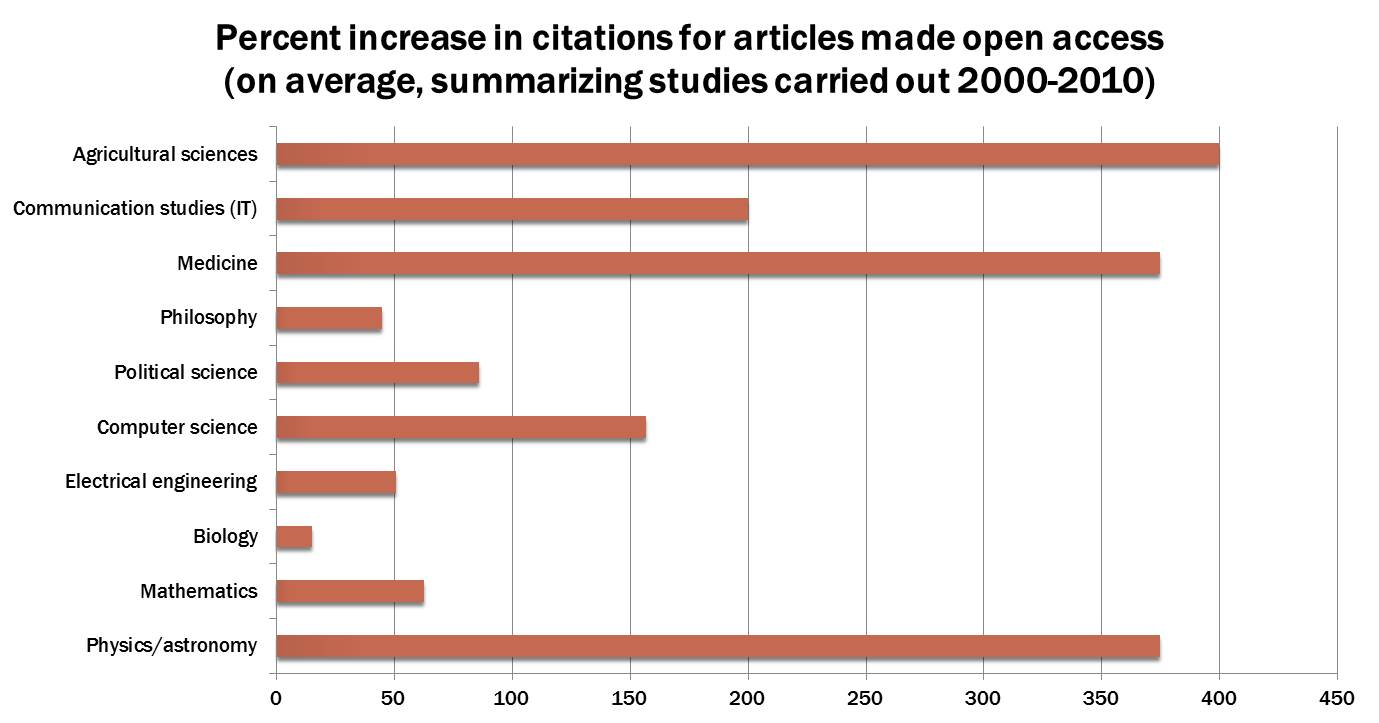
Now let’s look at how this benefits your institution:
- Citations per faculty are an essential aspect of university ranking methodologies, so increasing citations will definitely help boost your rankings.
- University rankings reflect many measures. Evaluate repository discovery and use directly, without promising a change in rank.
- The impact of your scholarly work will be more far-reaching, inspiring further research, contributing to existing studies, and insights gleaned being utilized for practical and commercial purposes.
- You will gain more backlinks to your website, which is excellent for improving the search rankings of your institution.
- The institution will be able to establish a global presence, leading to more international students and funding opportunities.
University rankings use different methodologies and measures, and repository activity alone does not guarantee an improvement in ranking position. It is better to track concrete outcomes such as deposits, downloads, geographic reach, citations, and collaborations.
4. Preservation of Scholarly Work
Use a written preservation plan with integrity checks, copies in separate locations and clear responsibilities. The COAR good-practice framework provides criteria for discovery, access, reuse and preservation.
A repository can support preservation when the institution commits to formats, backups, integrity checks, metadata, rights and an ongoing preservation plan. Digitizing physical collections remains a separate task.

Digitization can improve access to eligible print collections, but storage does not replace conservation of originals. Budget for scanning quality, permissions, metadata and ongoing storage.
The SciSpace Discovery Suite describes workflows for discovery and repository management. Check the current product configuration and institutional rights policies before assuming an item may be openly deposited.
How Do You Create an Institutional Repository?
If reading this has helped you realize the importance of institutional repositories and you want to learn more about the steps involved in building a repository, here’s a brief overview of how to get started:
1. Craft an Institutional Repository Policy
Consider setting guidelines and rules for content submission, vetting and reviewing of manuscripts, and access privileges.
2. Select a Repository Platform
Analyze your requirements and constraints, and select an institutional repository software package that can host, manage, and showcase your research output.
3. Get Compatible and Supporting IT Infrastructure
Acquire the necessary software and hardware required to launch, run and, maintain your repository at all times.
4. Train Relevant Stakeholders and Library Staff
Help concerned teams like librarians and faculty understand their roles and responsibilities, including different processes involved.
5. Populate the Repository With Relevant Content
Get the repository operational quickly by digitizing your print collection and encouraging faculty and researchers to deposit existing work.
6. Develop and Implement a Promotional Strategy
Use marketing channels such as email, social media, and search engines effectively to increase visibility and citations.
7. Actively Track Key Adoption and Readership Metrics
Measure and review critical metrics such as file downloads, backlinks, citations, deposits, and others to find out and fix deficiencies and roadblocks.
For more information, check out this blog post on how to set up an institutional repository quickly.
Wrapping Up
Whether or not your institution has an Open Access Policy, creating an online repository offers numerous benefits to your institution. It is a great way to gain visibility, increase competitiveness and improve international standing.
Of course, there are constraints and challenges involved, such as securing funding, hiring or allocating technical expertise, developing consistent workflows, encouraging researcher participation, and managing copyright and access issues.
The value of a repository ultimately depends on how well it fits the institution's needs and how consistently it is maintained. A repository project can improve discovery and access when records are well described, appropriately indexed, and kept available over time.
The key is to define what you want the repository to achieve, establish realistic measures of success, and build the policies and workflows needed to support it.