AI-proofreading tools are invaluable assets for researchers. This article gives you an overview of AI proofreaders and their role in enhancing academic writing.
In the research realm, maintaining the highest standards of accuracy and clarity is paramount particularly when you’re working on a research paper. The dissemination of knowledge and advancements in various fields hinges on the meticulous presentation of findings and methodologies. However, the process of manuscript preparation, editing, proofreading, and reviewing can be time-consuming and often lead to delays and potential errors.
And that’s when AI proofreading comes into the picture. AI proofreading tools are new-age technology aid that is revolutionizing the way research is communicated and published. AI-powered proofreading tools are proving to be invaluable assets for researchers and editors, streamlining the proofreading process and ensuring the highest quality of academic work. This article gives you an overview of AI tools for proofreading and their role in enhancing academic writing.
The Rise of AI Proofreading in Scholarly Publishing
Traditionally, proofreading has been a meticulous and time-consuming task, often relying solely on the expertise of human editors.
While human reviewers play an essential role in assessing the overall quality and content of manuscripts, AI proofreading tools offer an additional layer of reinforcement by identifying and correcting grammatical errors, inconsistencies, and stylistic issues.
AI proofreading tools are most useful for language-level problems. Depending on the tool, they can identify issues such as:
Grammar and sentence-structure errors
Spelling and punctuation mistakes
Inconsistent terminology
Wordiness and awkward phrasing
Inconsistent US or UK English
Some style and readability problems
Repeated words or constructions
They are less reliable for questions that require subject-matter expertise. For example, a proofreading tool cannot determine whether your statistical analysis is appropriate simply because the sentence describing it is grammatically correct.
A useful workflow is therefore to use AI for the first pass, review each substantive suggestion, and perform a final human check before submission.
AI proofreading tools can be applied at various stages of research and scholarly publishing. Here are a few of them —
Manuscript Preparation
Researchers can use AI proofreading tools to identify and correct errors in their manuscripts before submitting them for review. This helps to ensure that the initial submission is of high quality and reduces the likelihood of errors being raised during the review process.
Peer Review Process
Editors and reviewers must follow the journal’s confidentiality and AI-use policy before putting an unpublished manuscript into a third-party tool. Authors and editors should still assess scientific content themselves.
Journal Publishing and Archiving
AI proofreading tools can be integrated into journal publishing platforms to ensure that published manuscripts adhere to the journal's style guidelines and are free of errors. This helps to maintain the integrity and reputation of the journal.
Here are ten currently available proofreading options. They differ in language coverage, research focus and editing workflow; compare suggestions with the manuscript rather than accepting every change automatically.
10 AI proofreading tools for academic writing
1. SciSpace Academic Proofreader
SciSpace Academic Proofreader is designed specifically for academic writing. It can check grammar, punctuation, style, and consistency while providing controls intended to preserve citations, quotations, numbers, units, and equations.
The tool can also return a cleaned version and tracked-change DOCX, making it useful when you want to inspect what changed rather than simply replace your original text.
Best for: Researchers and students who want research-focused proofreading with attention to citations, equations, and technical details.'
2. Paperpal
Paperpal is an academic writing and proofreading platform focused on research manuscripts, essays, theses, and other scholarly documents. Its proofreader checks grammar, punctuation, spelling, word choice, and consistency.
Paperpal also provides academic-specific features such as terminology handling and consistency checks for items including numbers, statistics, tables, and figures.
Best for: Researchers preparing manuscripts, theses, and other academic documents for submission.
3. Trinka
Trinka is an AI writing assistant built specifically for academic and technical writing. Alongside grammar and language corrections, it provides consistency checks, a personal dictionary, and style-guide preferences.
Its proofreading workflow can also work with full documents while retaining formatting, tables, structure, and code integrity.
Best for: Technical, scientific, and academic writing that requires more than a basic grammar check.
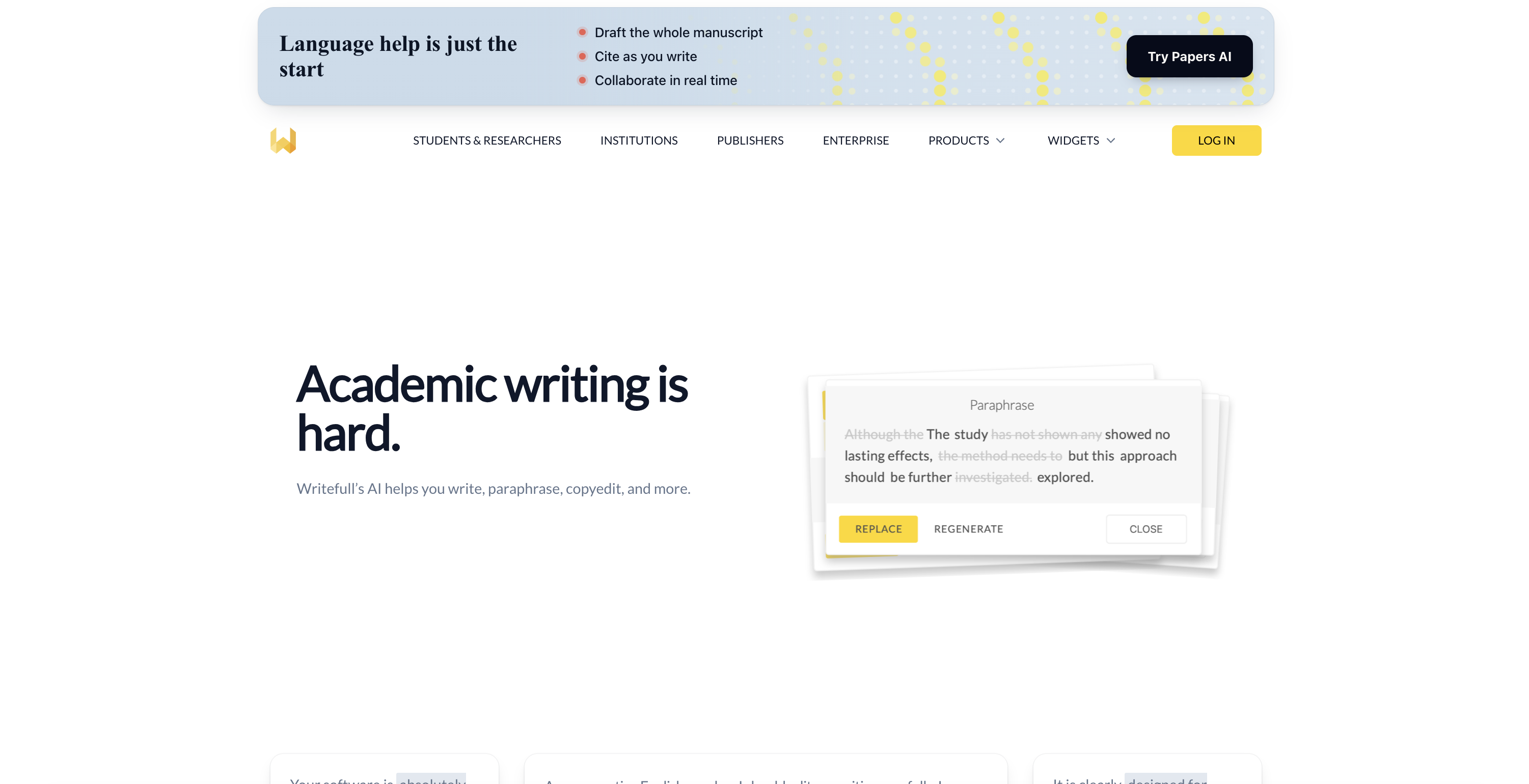
4. Writefull
Writefull focuses specifically on academic writing. Its language models are trained on research papers, and its tools provide language feedback for grammar, word choice, phrasing, and academic style.
Writefull also offers Writefull Revise, which allows users to upload a document for language revision and download a revised version. Its integrations with Microsoft Word and Overleaf make it particularly relevant to researchers working in those environments.
Best for: Researchers and students who want language feedback tailored to academic writing, including Word and LaTeX workflows.
5. Grammarly
Grammarly is a general-purpose writing assistant that checks grammar, spelling, punctuation, clarity, style, and other aspects of writing.
It can be useful for cleaning up the language in a research paper, particularly when you want quick sentence-level feedback. However, because it is not designed exclusively for scientific writing, researchers should review suggestions involving technical terminology, equations, citations, and discipline-specific language.
Best for: General grammar and clarity checks across academic and everyday writing.
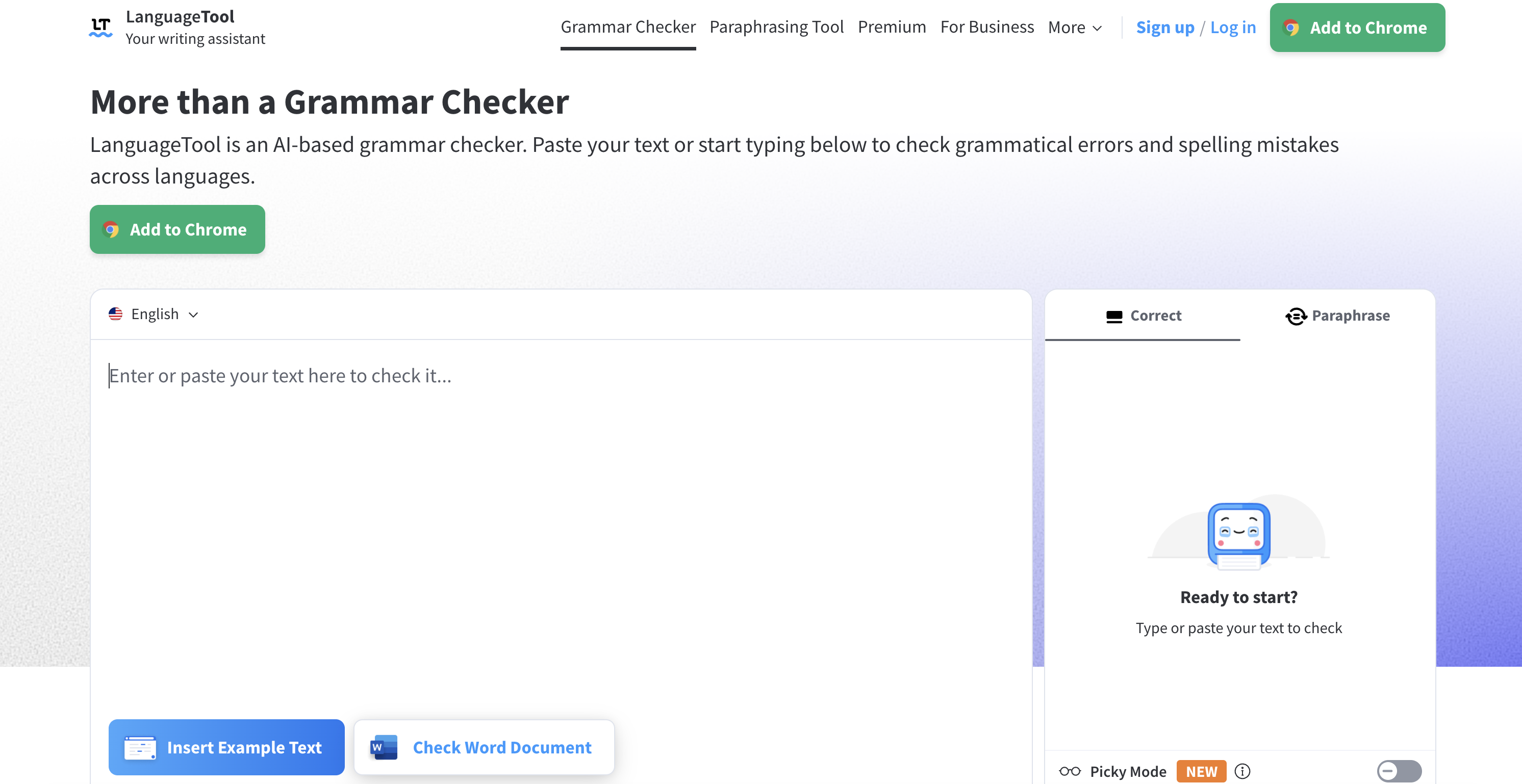
6. LanguageTool
LanguageTool provides spelling, grammar, punctuation, and style suggestions and supports a wide range of languages and language varieties.
It can be particularly useful for researchers working in multilingual environments or writing in English as an additional language. LanguageTool also offers a personal dictionary and style-guide features that can help maintain consistency across longer documents.
Best for: Multilingual researchers and writers who want grammar and style assistance across multiple languages.
7. ProWritingAid
ProWritingAid combines grammar and spelling checks with broader writing analysis. Its reports examine areas such as sentence structure, repetition, readability, and style.
That makes it useful beyond basic proofreading, although some of its recommendations may be more appropriate for general writing than for scientific prose. Researchers should therefore decide whether a suggested simplification preserves the precision required by the subject.
Best for: Writers who want detailed feedback on style, readability, and sentence-level issues.
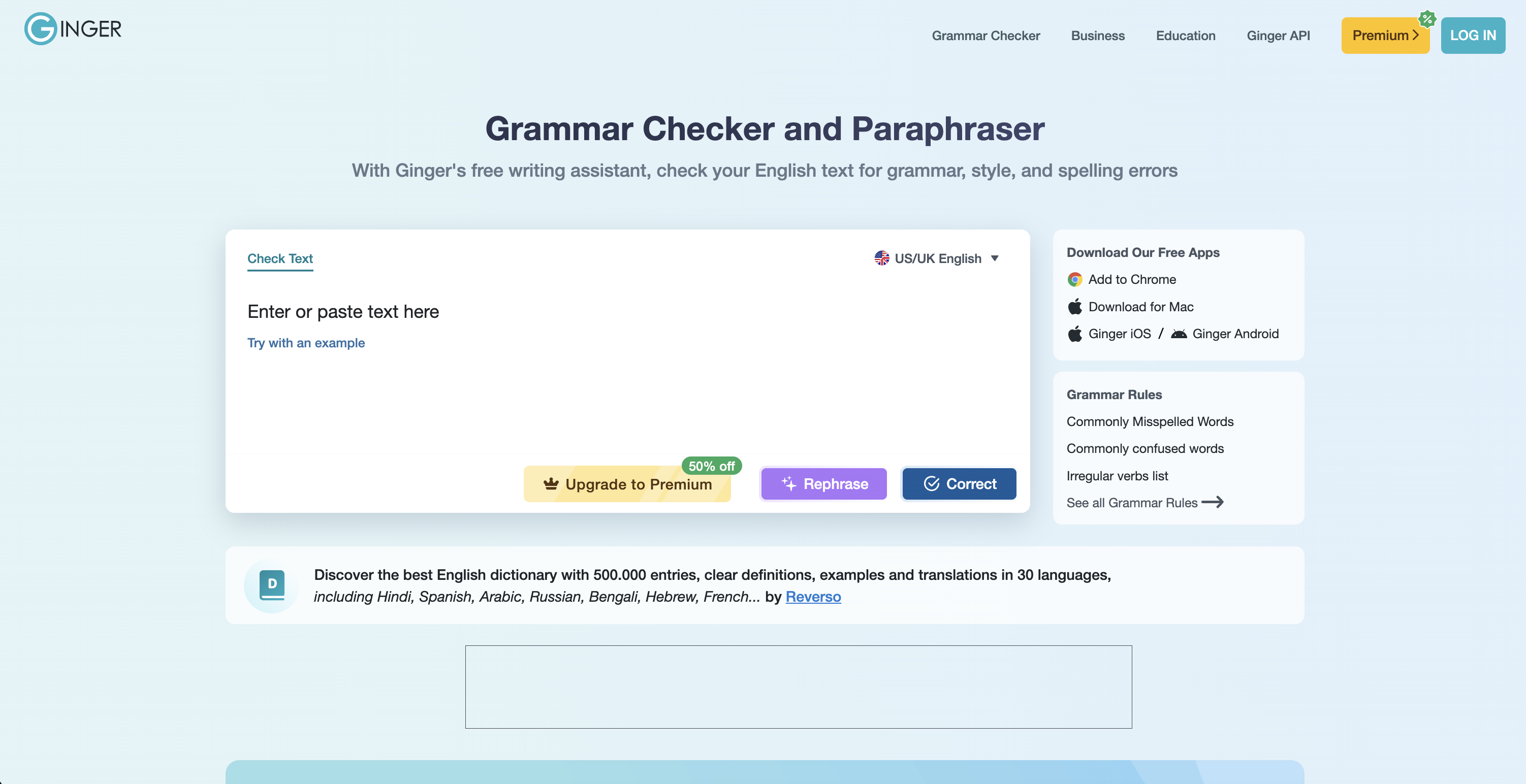
8. Ginger
Ginger provides grammar, spelling, punctuation, and sentence-level suggestions. It also offers rewriting and paraphrasing features and integrations with browsers and Microsoft Office.
For research writing, Ginger can be useful for catching common language errors, particularly during an early editing pass. Technical terminology and substantive changes should still be checked manually.
Best for: General English grammar and sentence-level proofreading.
9. Hemingway Editor
Hemingway Editor focuses heavily on readability. It highlights complicated sentences and other writing issues that can make prose harder to follow. Its paid Editor Plus version also provides AI-powered grammar and rewriting features.
This can be useful when a research paper contains unnecessarily dense prose. However, researchers should not automatically simplify every sentence: technical terminology, qualifications, and some passive constructions can be appropriate in academic writing.
Best for: Improving readability and reducing unnecessary complexity in academic prose.
10. WhiteSmoke
WhiteSmoke provides English grammar, spelling, punctuation, and style tools, along with features such as translation and a plagiarism checker in some plans.
It is a general-purpose writing tool rather than one built specifically around scholarly publishing. For research papers, it can therefore be used for language-level proofreading, while journal-specific requirements and technical content should be checked separately.
Best for: General English proofreading and writing assistance.
Benefits of AI Proofreading in Research
Faster language editing
AI tools can scan large amounts of text quickly, making it easier to identify obvious language problems across a long manuscript.
More consistent writing
A proofreading tool can help identify inconsistent spelling, terminology, punctuation, or language varieties across different sections of a paper.
Clearer academic prose
Some tools can flag wordy or difficult-to-read sentences and suggest alternatives. These suggestions can be useful when a sentence is unnecessarily complicated without sacrificing technical precision.
Support for multilingual researchers
Tools with multilingual support can help researchers identify language issues when writing in English or another supported language.
Limitations and Considerations for AI Proofreading
While AI proofreading tools offer significant benefits, it is important to understand their limitations and use them responsibly.
Human Review Remains Essential
AI proofreading tools should not be considered a substitute for human review. Human editors still play a crucial role in assessing the overall quality, content, and coherence of manuscripts.
Error Detection Accuracy
AI proofreading tools are not infallible and may occasionally miss errors or suggest incorrect corrections. It is essential to carefully review the suggestions provided by AI tools and exercise critical judgment.
Contextual Understanding
Proofreading tools may struggle with contextual nuances and stylistic choices. Authors should carefully review the suggestions provided by AI tools to ensure that they align with the intended meaning and style of the manuscript.
Ready to polish your research paper? SciSpace Academic Proofreader can help identify grammar, punctuation, style, and consistency issues while keeping your academic writing in context. Review suggested changes, refine your manuscript, and prepare it for submission—all in one place.
Conclusion
AI proofreading tools have revolutionized the way we approach writing, providing valuable assistance in identifying and correcting errors, enhancing style, and improving overall clarity. These tools are not meant to replace human editors but rather complement their expertise, ensuring that written work meets the highest standards of quality and effectiveness.
By leveraging AI proofreading tools, authors can elevate their communication skills and achieve greater success in various endeavors. If you’ve used any of the above proofreading tools, you can share your experience with us and recommend the best tool to our readers!